
Milan Certosa District
Exploring the District
The Area and the Project: Between History and Urban Regeneration

The Project
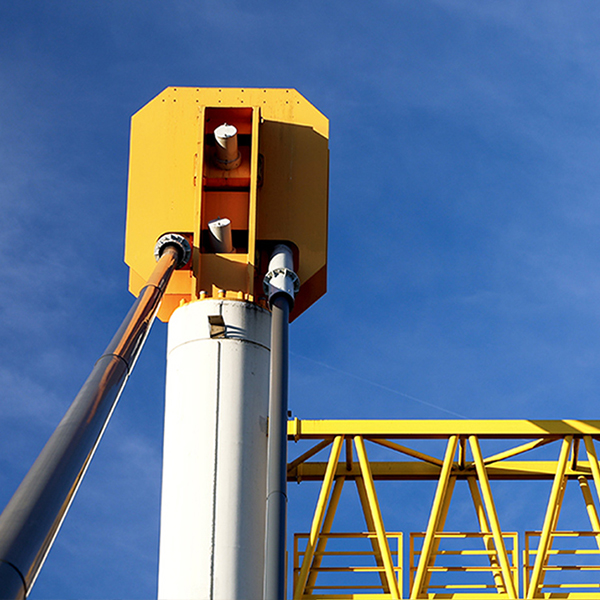
The Milan Certosa District, located in the northwestern part of the city, is at the heart of a major redevelopment project led by RealStep, a real estate development company specializing in the sustainable urban regeneration of former industrial sites. Guiding the transformation process is a vision centered on people—and, in particular, on the quality of life for everyone who lives in the district or visits it for work or leisure throughout the day—through a combination of sustainability, innovation, and collective well-being.
True transformation lies in creating healthy work environments, offering services that allow people to make the most of their time around the clock—from food to entertainment and events—but above all, in including and engaging citizens. An environment is considered high-quality when it succeeds in including all social classes and groups.
— Stefano Sirolli,
, Chief Executive Officer of RealStep
The Philosophy
The three pillars: food, music, and the arts
The Milano Certosa District development project aims to preserve the area’s history and character while fostering a vibrant neighborhood rich in musical and artistic events , where charming former industrial spaces stand alongside innovative buildings, amidst green spaces, office areas, new services, retail stores, and restaurants.
The Milano Certosa District is a new model of urban regeneration, where the redevelopment of spaces revolves around the creation of communities—achieved by integrating all the services necessary to meet people’s daily needs into the district.
— Vincenzo Giannico
, Executive Director and Board Member of RealStep
Why here?
A social, connected community rich in opportunities
This area in the northwest quadrant of Milan is ideal for urban redevelopment because it features a mix of residential, commercial, and artisanal spaces, and is well connected to the rest of the city via public transportation.
It is this enormous potential—which has long remained untapped—that led RealStep to choose this district as the site for the Milano Certosa District project.
We rode around on a scooter far and wide and realized that this was the ideal place to launch a new urban renewal project. It’s a social, well-connected area—a place where a community can live and thrive.
— Pietro Guidobono Cavalchini,
, Chief Investment Officer at RealStep
How did the
brand identity
in the district?

The logo
The image of the Milano Certosa District is the result of a positive synergy between the local area, young talent, and the creative agency Sharing Idea. The new visual identity stems from the collective effort of the Sharing team and the students from the Milan Polytechnic, who were the main participants in the workshop organized by the Certosa District in collaboration with the Communication Design program. The result? A fresh, lively, and innovative image that fully reflects the district’s vitality.
Wayfinding, Fonts, and Colors
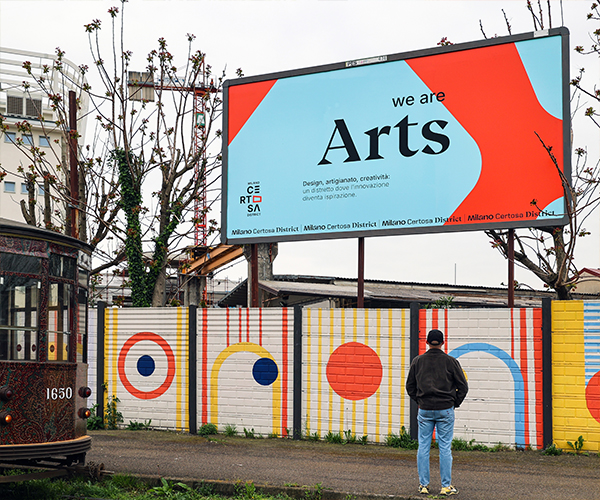
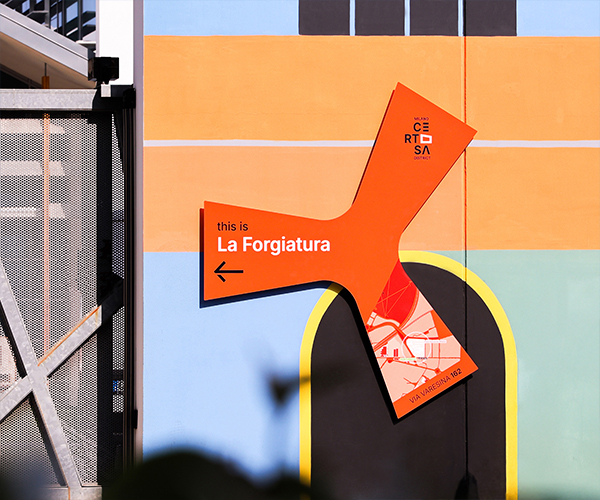
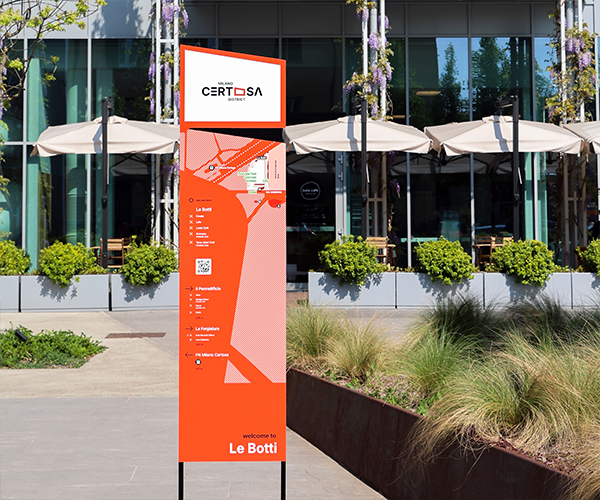
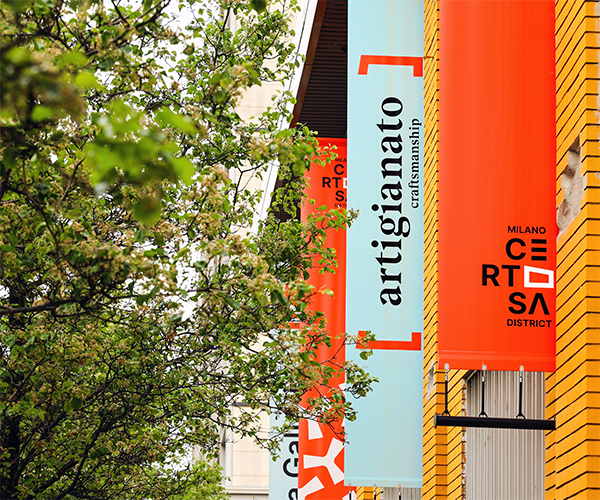
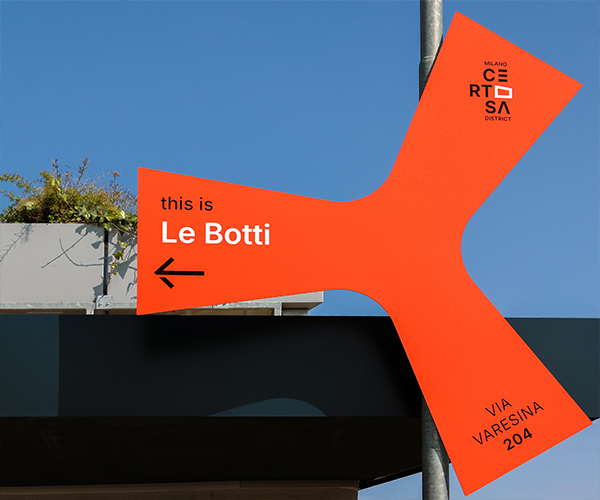
Starting with the brand's distinctive elements, the design studio Migliore+Servetto has created an system of urban graphics that guides visitors as they explore the district and highlights—with new fonts and colors—its three core themes: Food, Music, and Arts.
A project centered on the concepts of participation, multisensory experiences, and accessibility and strengthens the identity of the Milano Certosa District, offering the community a new way to explore and experience the district.
A Look Back at the Past
How did the Milano Certosa District “
” come about?
The district, which spans the neighborhoods of Musocco, Villapizzone, and Quarto Oggiaro, takes its name from the Certosa train station and the Certosa di Garegnano, a historic church rich in frescoes dating back to the mid-1300s.
Until the early 1900s, the area was characterized by small villages surrounded by countryside, but in the early 1920s, a turning point occurred that would shape the development of the entire region: near the Certosa, the Milano-Laghi highway—the world’s first toll road—was built.
Thanks to the presence of the highway and the railroad, the area has become a strategic location for urban and industrial development: around these two major transportation corridors, residential areas, businesses, and major industrial facilities have sprung up, including La Forgiatura, a former metallurgical plant that is one of the landmarks of the Milano Certosa District.
A story of profound transformations that continues today with the district’s new phase of urban regeneration.
The Milano Certosa District offers a fresh perspective on old Milan, blending its industrial history with an innovative future.


